Daddy Signature: A Friendly Handwritten Font for Web Design
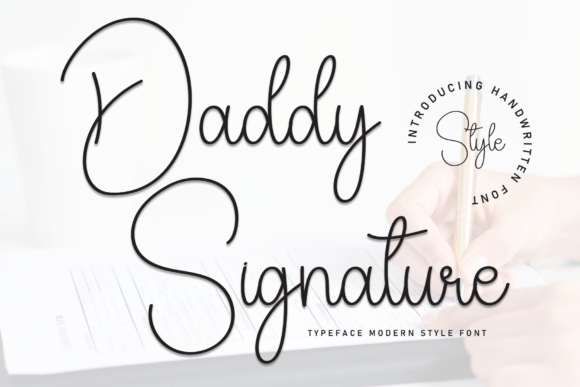
In the crowded landscape of digital products and online services, establishing an immediate emotional connection with users is paramount. As web designers and UI creators, we often rely on clean sans serif fonts for body copy to ensure maximum readability, but the personality of a brand is frequently established in the headlines. This is where Daddy Signature shines. Developed by Script Amp, this sweet and friendly handwritten display font offers a unique opportunity to inject warmth and approachability into digital interfaces without sacrificing professionalism.
Unlike rigid geometric typefaces that can feel cold or overly corporate, Daddy Signature mimics the natural flow of human handwriting. Its rounded strokes and playful curves create a visual rhythm that feels inviting rather than demanding. For a digital product creator, this distinction is crucial. When a user lands on a homepage or a sales page, the typography sets the tone before they even read the first word. A font like Daddy Signature signals that the brand behind the screen is human, accessible, and perhaps a bit fun.
Enhancing Visual Hierarchy in Digital Layouts
Effective web design relies heavily on visual hierarchy to guide the user's eye through content. Daddy Signature serves as an excellent tool for establishing this hierarchy, particularly in hero sections and section headings. Because it is a display font, it commands attention naturally. When paired with a neutral sans serif font for body text, the contrast creates a clear separation between navigational elements, headlines, and detailed information.
Consider a landing page for a creative coach or a boutique online store. Using Daddy Signature for the main value proposition allows the message to stand out against a busy background image or a solid color block. The organic nature of the script breaks up the grid-like structure of standard web layouts, creating focal points that encourage scanning behavior. Users are more likely to pause and engage with a headline that feels personal and distinct compared to one that looks like default system text.
However, usability must always come first. While Daddy Signature is perfect for short phrases, logos, and decorative accents, it is not intended for long-form body copy. Handwritten fonts can reduce reading speed if used in large blocks of text, especially on smaller mobile screens. The best practice is to reserve this typeface for elements that need to convey emotion or brand voice, such as call-to-action buttons, testimonial highlights, or navigation labels that require a softer touch.
Strategic Applications for Brand Identity
The versatility of Daddy Signature makes it a valuable asset in various digital contexts. For SaaS founders looking to humanize their software, incorporating this font into onboarding screens or empty states can reduce user anxiety and make the interface feel more welcoming. Similarly, for bloggers and content creators, using Daddy Signature in blog headers or social media graphics embedded within articles adds a layer of editorial charm that static fonts cannot replicate.
- Hero Sections: Use large sizes to create an immediate emotional hook on homepages.
- Call-to-Action Buttons: Apply to buttons like "Join Us" or "Get Started" to soften the sales pitch.
- Testimonials: Highlight customer quotes to make them feel like personal notes rather than database entries.
- Logo Design: Ideal for brands in the lifestyle, parenting, or creative education sectors.
- Pricing Tables: Use for plan names or special offer badges to draw attention to value.
When designing for e-commerce, specifically for niches like wedding invitations, handmade goods, or children's products, the "cute and fun" aesthetic of Daddy Signature aligns perfectly with the target audience's expectations. It reinforces the brand story of craftsmanship and care. In these scenarios, the font acts as a visual shorthand for the brand's values, building trust before a transaction ever takes place.
Optimizing Readability Across Devices
One of the challenges with script and handwritten fonts is maintaining legibility across different screen sizes and resolutions. To ensure Daddy Signature performs well in a responsive environment, designers must pay close attention to sizing and line height. On mobile devices, where screen real estate is limited, it is advisable to increase the font size slightly more than you would for a standard sans serif to prevent the characters from appearing cramped.
Contrast is another critical factor. Because handwritten fonts often have varying stroke widths, they can get lost against complex backgrounds. When using Daddy Signature over images, ensure there is a sufficient overlay or drop shadow to separate the text from the background noise. For dark mode interfaces, verify that the white or light-colored script maintains enough weight to remain crisp. Testing the font on actual devices, not just desktop simulators, is essential to confirm that the "friendly" vibe doesn't turn into illegible scribbles on a small smartphone screen.
Mastering Font Pairing for Modern Typography
To get the most out of Daddy Signature, understanding font pairing is essential. A display font rarely works in isolation; it needs a supporting cast. The most effective pairing for Daddy Signature is a clean, modern sans serif font. Fonts like Inter, Roboto, or Open Sans provide a stable foundation that allows the playful characteristics of the script to pop without creating visual chaos.
For a more sophisticated or editorial look, pairing Daddy Signature with a contemporary serif font can create an interesting tension between the formal and the informal. This approach works well for lifestyle blogs or luxury brands that want to appear high-end yet approachable. The key is balance; if the supporting font is too decorative, it will compete with Daddy Signature, diluting the impact of both. Keep the body copy simple and let the handwritten element do the heavy lifting for brand personality.
Licensing and Technical Considerations
Before integrating Daddy Signature into client projects or commercial products, it is vital to review the licensing terms provided by Script Amp. Web usage often requires specific webfont licenses distinct from desktop licenses. Ensure that the file formats included (such as WOFF or WOFF2) are optimized for web performance to avoid slowing down page load times, which can negatively impact SEO and user experience.
Additionally, check for multilingual support if your project targets a global audience. While many modern script fonts include extensive character sets, verifying glyph coverage for special characters or alternative languages prevents layout breaks later in the development process. By treating typography as a functional component of the design system rather than just an aesthetic choice, designers can leverage Daddy Signature to create cohesive, conversion-focused, and emotionally resonant digital experiences.